
Best Months to See the Aurora Borealis in Norway
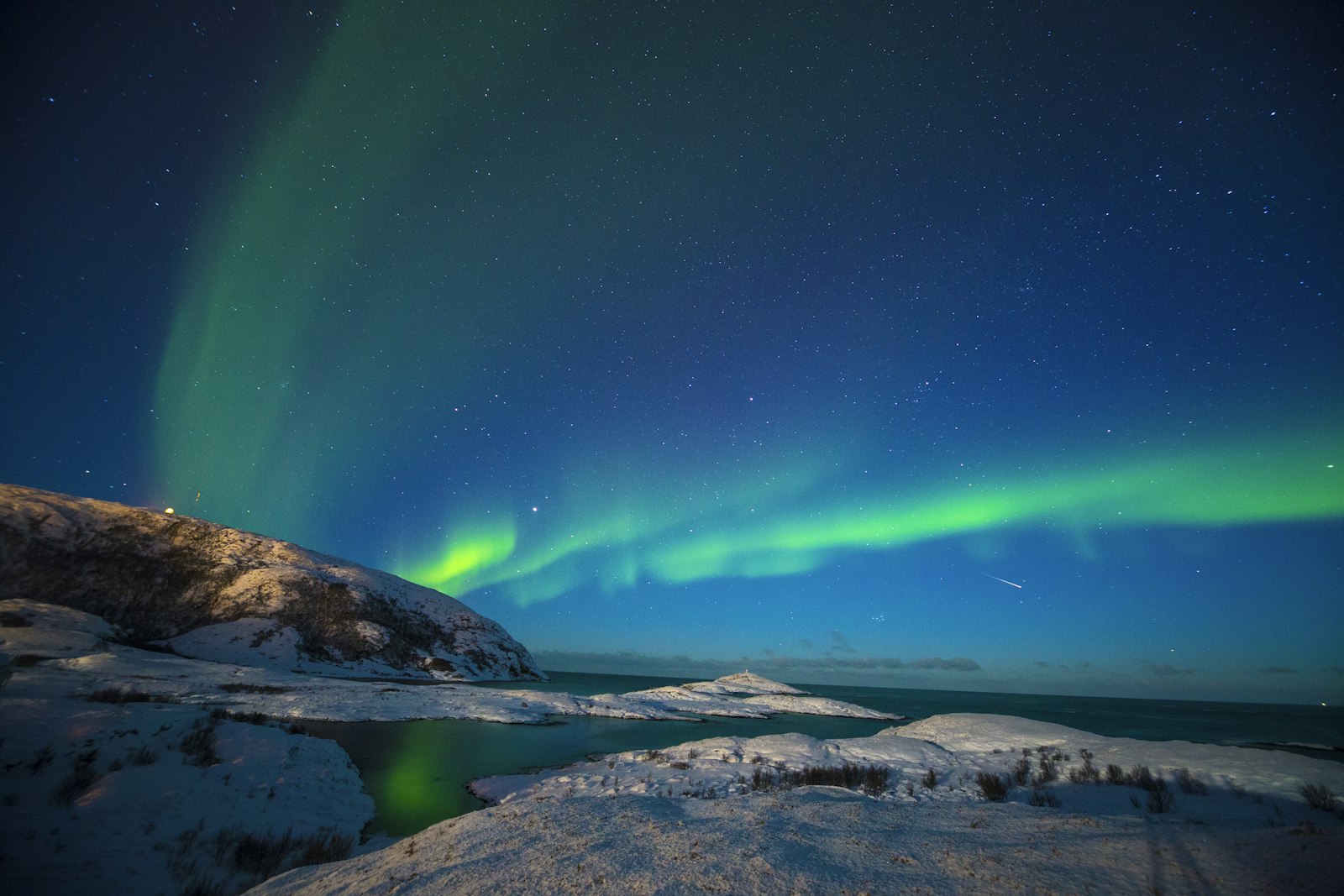
The Northern Lights are present year-round — the aurora itself is a constant phenomenon in the upper atmosphere. What changes with the seasons is whether the sky is dark enough to see it. Around Tromsø, that window runs from roughly late September to late March, when the nights are long and dark enough for the aurora to be visible.
Polar night (late November – mid January)
Tromsø sits above the Arctic Circle, so during the polar night the sun doesn't rise at all — you get the most hours of darkness per day, which means more opportunities to catch a clear window between clouds. Weather is more variable during this period, so flexibility helps.
The equinox seasons (September–October and February–March)
Aurora researchers have long observed that geomagnetic activity tends to be statistically higher around the spring and autumn equinoxes (a pattern known as the Russell–McPherron effect). Combined with milder temperatures than the depths of winter, September–October and February–March are often considered the sweet spot for a Northern Lights trip to Tromsø.
Practical tips
Clear skies matter as much as the season — the aurora forecast (KP index) is only useful if the clouds cooperate. Booking 2–3 nights rather than a single night meaningfully improves your odds, since a private, flexible chase route (like our Private Group and Small Group tours) can relocate to wherever the sky is clearest.